Detroit Music History:
The birth of classic rock and soul
music in Detroit in the late sixties.
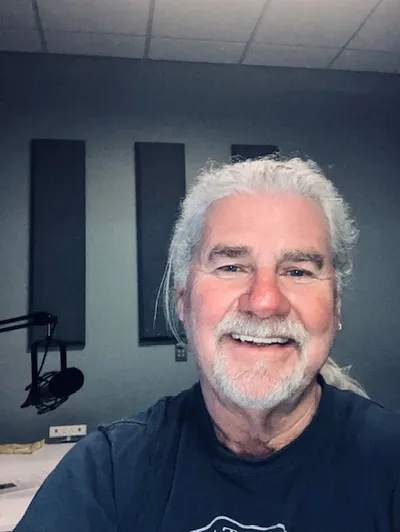
ABOUT HIT MEN & THE QUEEN OF THE NIGHT the author, FRED MEYERS
The first song that I got on the radio as a Promotion Man on my first day with Warner Bros. was “Eruption” & ‘”You Really Got Me” by Van Halen.
Three days later, I was with Van Halen in Detroit for their 3rd show as a signed Warner Bros. artist… we were all 22-23 years old and had no idea what was in store for us.
We were all new to the game—but we learned fast. We had to. They exploded almost immediately.
That was my introduction to the music business.
Back then, radio was everything. If you didn’t get airplay, you didn’t exist. The people responsible for making that happen were called Promotion Men—the ones fighting behind the scenes to get records heard.
I grew up in Detroit during one of the most explosive eras in the American music scene and went on to work as a promotion man for Warner Bros. Records, right in the middle of it all:
The radio stations
The record stores
The artists trying to break through
The pressure from the labels
I saw how hits were made—and how fast it could all fall apart.
Hit Men is inspired by that world—not just the bands, but the system behind them:
The radio wars
The hustle for airplay
The fight for a voice
Set in post-riot Detroit, Hit Men follows a young promotion man and a fearless woman determined to break into rock radio as they navigate a business driven by power, politics, and instinct. This historical fiction reveals the gritty reality of the Detroit music scene and how hits were really made.
Detroit Music History:
Hit Men and the Rise of Rock and Soul music in the sixties.
ABOUT HIT MEN & THE QUEEN OF THE NIGHT the author FRED MEYERS
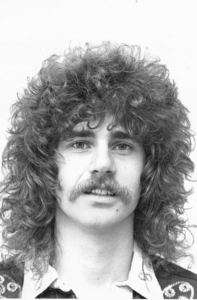
The first song that I got on the radio as a Promotion Man on my first day with Warner Bros. was “Eruption” & ‘”You Really Got Me” by Van Halen.
Three days later, I was with Van Halen in Detroit for their 3rd show as a signed Warner Bros. artist… we were all 22-23 years old and had no idea what was in store for us.
We were all new to the game—but we learned fast. We had to. They exploded almost immediately.
That was my introduction to the music business.
Back then, radio was everything. If you didn’t get airplay, you didn’t exist. The people responsible for making that happen were called Promotion Men—the ones fighting behind the scenes to get records heard.
I grew up in Detroit during one of the most explosive eras in the American music scene and went on to work as a promotion man for Warner Bros. Records, right in the middle of it all:
The radio stations
The record stores
The artists trying to break through
The pressure from the labels
I saw how hits were made—and how fast it could all fall apart.
Hit Men is inspired by that world—not just the bands, but the system behind them:
The radio wars
The hustle for airplay
The fight for a voice
Set in post-riot Detroit, Hit Men follows a young promotion man and a fearless woman determined to break into rock radio as they navigate a business driven by power, politics, and instinct. This historical fiction reveals the gritty reality of the Detroit music scene and how hits were really made.
L.A. Lloyd – Nationally Syndicated Rock Radio - Rock 30
Book Forward
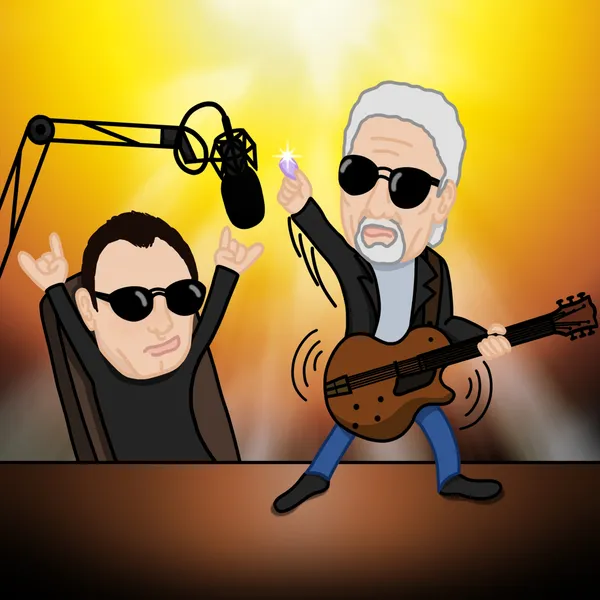
I’ve known Fred Meyers for over 30 years—and I’ll tell you this right up front… Fred doesn’t just tell stories. He lived them. We met back in 1995. I was at KROX—101X—in Austin. Fred was the promo rep for Virgin Records. If you know that era, you know what that means. No algorithms. No streaming. Just relationships. Instinct. Gut. Fred had it. He wasn’t just working records—he was helping create moments, much like the vibrant Detroit music scene of that time. And that’s what Hit Men is. This isn’t a polished, outsider take on the music business. This comes from someone who was in the room… backstage… on the phone… in the trenches. The ‘60s and ’70s weren’t just a great time for music—they were a proving ground. Fred was right there. Working with artists when everything was on the line. You feel that in this book. And then came a time we got to bring those stories to life together. From 2019 to 2021, we teamed up for the Promotion Man Podcast. And what stood out every time… Fred’s memory. His perspective. His honesty. He doesn’t just remember what happened—he remembers how it felt. The pressure. The risk. The payoff. That’s rare. And that’s what makes Hit Men work. This isn’t just about hits. It’s about the grind behind them. The belief. The chaos. The moments where everything can fall apart…or turn into something legendary. If you’ve ever wondered how a song breaks… how an artist connects… how this business really works—this is your backstage pass. And if you know Fred… you’ll hear him in every word. Real. Passionate. Unfiltered. Just like he’s always been. If you want to dive deeper, the Hit Men audiobook is a must-listen. —LA Lloyd
My name is Jeff Carrol, and I’ve been in the radio business since 1974. Over the years, I’ve been part of some of the most influential rock radio stations in the Southwest, including KATT in Oklahoma, KLBJ-FM and KGSR in Austin, Texas. Beginning in 1982, I worked on the air and held positions including Music Director, Program Director and Operations Manager. I also consulted rock radio stations in Louisiana, Illinois, Missouri and Texas.
For almost 30 years, I was one of the people who helped decide what music got played on the radio.
That’s how I came to know Fred Meyers.
I first met Fred in the early 1980s when he was a record company representative—or, as we called them, a promotion man—for Warner Bros. Records.
So, what exactly was a promotion man?
Promotion men were the unsung heroes of the record business—the behind-the-scenes people the public rarely saw. Their job was to get their artists’ music exposed to mass audiences. Most importantly, that meant getting records played on the radio. They also helped arrange interviews, promoted concerts, worked with record stores and found creative ways to get their artists noticed.
Their job was simple to describe but incredibly difficult to do: help turn records into hits.
They were the Hit Men.
They did it through persistence, creativity, networking and relationships. We called it “schmoozing.” A great promotion man built relationships and trust with radio Music Directors and Program Directors—the gatekeepers who decided which new records got on the air.
That might mean a great dinner, a round of golf, front-row concert tickets, an artist interview, a promotional trip or some unforgettable event designed to make one record stand out from the dozens of others competing for attention.
Was there some sex, drugs and rock ’n’ roll mixed into that world? Absolutely.
But underneath all of it was something much more important: relationships and trust. When a promotion man walked into your office with a record by a new artist, his reputation mattered. If you trusted him—and knew that he understood your station and your audience—you listened.
And believe me, Fred Meyers was one of the best.
Fred was creative, enthusiastic and downright fun. But there was something else that separated him from a lot of people in the business: he truly believed in the music. He loved it. He lived it. Music was his religion, and that passion made him incredibly effective at promoting his artists.
I remember Fred dressing up as the Pope to deliver a new single. He took me to meet the Rolling Stones many times. There were trips to New York and Los Angeles, with airfare and hotels, so we could see new artists perform live and understand what the excitement was about.
One night I’ll never forget was seeing Lenny Kravitz at the Bottom Line in New York at the very beginning of his career.
Those experiences mattered.
Creating a hit required timing, great musicianship, creativity and certainly some luck. But behind many of those records were promotion people working relentlessly to make sure somebody heard them.
Those were the Hit Men.
And I can think of no better person than Fred Meyers to tell their story—the day-to-day stories, the behind-the-scenes life, the history, the struggles, the excitement and what it was really like to help turn music into hits.
Fred didn’t just witness that world. He lived it.
He is one of the true Hit Men.
Jeff Carrol
Radio Broadcaster, Music Director, Program Director & Operations Manager
Radio professional since 1974
Hit Men & the Queen of the Night - Introduction
Welcome to Hit Men, a high-octane drama about the birth of classic rock, R&B, and soul music in the late ’60s.
This is a story of a city on fire – a city alive with rebellion, with rhythm, and with the unbreakable will to be heard.
At its core, Hit Men follows two young dreamers fighting to carve out their place in a turbulent world: Fred Meyers, a relentless teenager dead set on becoming the youngest promotion man at Warner Brothers Records and Frankie Vale a vibrant determined young woman who is about to be the first female DJ in Detroit rock radio.
Their lives collide in the aftermath of the Detroit riots, bound together by the revolutionary fire of the MC5 and the chaotic beauty of a music scene about to change the world.
Hit Men blends the raw electricity of vinyl, the ambition of Almost Famous, the sociopolitical grit of Detroit 67, and the wild shenanigans of Entourage. Its soundtrack fuses original songs from 1968 and 1969 with the iconic anthems from MC5, Iggy and the Stooges, Alice Cooper, Bob Seger, and more.
Authentic, cinematic, and emotionally charged, this isn’t just about the music. It’s about the people who risk everything to make themselves heard.
We ride along as MC5 and Iggy and the Stooges both get signed on the same day by Elektra Records. Alice Cooper returns to Detroit to invent his concept of shock rock, and as Bob Seger claws his way toward stardom.
We witness the birth of FM radio: that fresh, unruly signal that championed album cuts over singles and changed how rock was heard forever.
We meet Rosalie Trombley, a trailblazing tastemaker at the powerful Big 8, whose Top 40 station blanketed half of the Midwest and launched stars into the stratosphere.
Every character you’ll hear is drawn from true stories except one: Jacqueline Davis. She was my invention, our inside look into Motown, one of the most successful record labels in America and the world. Jac is Frankie’s confidant and our window into Hitsville.
Themes of rebellion, feminism, and racial tension pulse through every chapter, intersecting with the intoxicating highs and crushing lows of the 1960s music industry.
And standing at the very center of it all is Detroit itself – both muse and menace – shaping every victory, every loss, and every unforgettable sound.
Anthony Bourdain once said, “That’s a status symbol, to say you’re from Detroit. It implies something. You come from a place where all this great music, all these great cars, and all these great cool things come from.”
This is Hit Men.
From the author of Hit Men & the Queen of the Night Fred Meyers
This is a work of historical fiction inspired by true stories that celebrate the vibrant Detroit music scene. Some characters are based on real people who significantly contributed to shaping this influential era—Rosalie Trombley, Punch Andrews, Berry Gordy, Dennis Frawley, Bob Ezrin, Shep Gordon, and many others who helped bring this captivating time to life.
The bands and artists portrayed—including Alice Cooper, MC5, John Sinclair, Cream, Led Zeppelin, The Stooges, Bob Seger, Diana Ross, Jackson 5, The Carpenters, Elton John, Stevie Wonder, and Death—represent a moment when Detroit became the most important breakout market in the country.
Detroit fans didn’t just listen; they actively shaped careers. They embraced artists like The J. Geils Band, Aerosmith, KISS, David Bowie, The Who, and Roxy Music, helping turn them into legends. This was a special city at a unique time in music history, which is also the backdrop for the Hit Men audiobook.
I’m deeply grateful to everyone who appears in these pages—and to the countless others who made the magic happen. This story is dedicated to every person who worked in radio or record label promotion; it is for you, it’s for us.
I’d also like to thank my daughter Lauren Alex Meyers (9/11/1984 – 12/23/2025) Rest in Power. Daddy misses you; my son Chase, my daughter-in-law Heather, and my village—Crash, Halen, Jager, Henley, and Zoey—my shining stars.
A heartfelt thank you to: Adam Christy, Gilbere Forte, LA Lloyd, Bill Thom, Glenn Curby, Bill Hales, Karen Savelly, Polly Price, Mark Wescott, Thomas Weschler, Darrin Crisp of Crisp Recording Studio, Aaron Szabo at Imagine Film Company, Ted Runnels at Lensaudio, Clayton Scott, Big Dog Rick Hayes, Jason Hill, Rick Howard, Denise George, Rosalie Tombley’s daughter Diane Lauzon, My Warner Bros crew, especially Murray Nagel, Mike Stone, David Urso. I’d also like to thank Bob Bean, Jerry Adams, Gil Roberts, Mike Dragus, Joe Mansfield, Craig Lambert, Danny Fields, Jerry Ross, Margaret Kramer, Joe Jackson, Morris Sullivan, Teresa Miranda, KC, my Virgin Records crew, all of my friends in records and radio and my two biggest fans—my sisters, Cheryl Kuhn and Marilyn Kolleth.
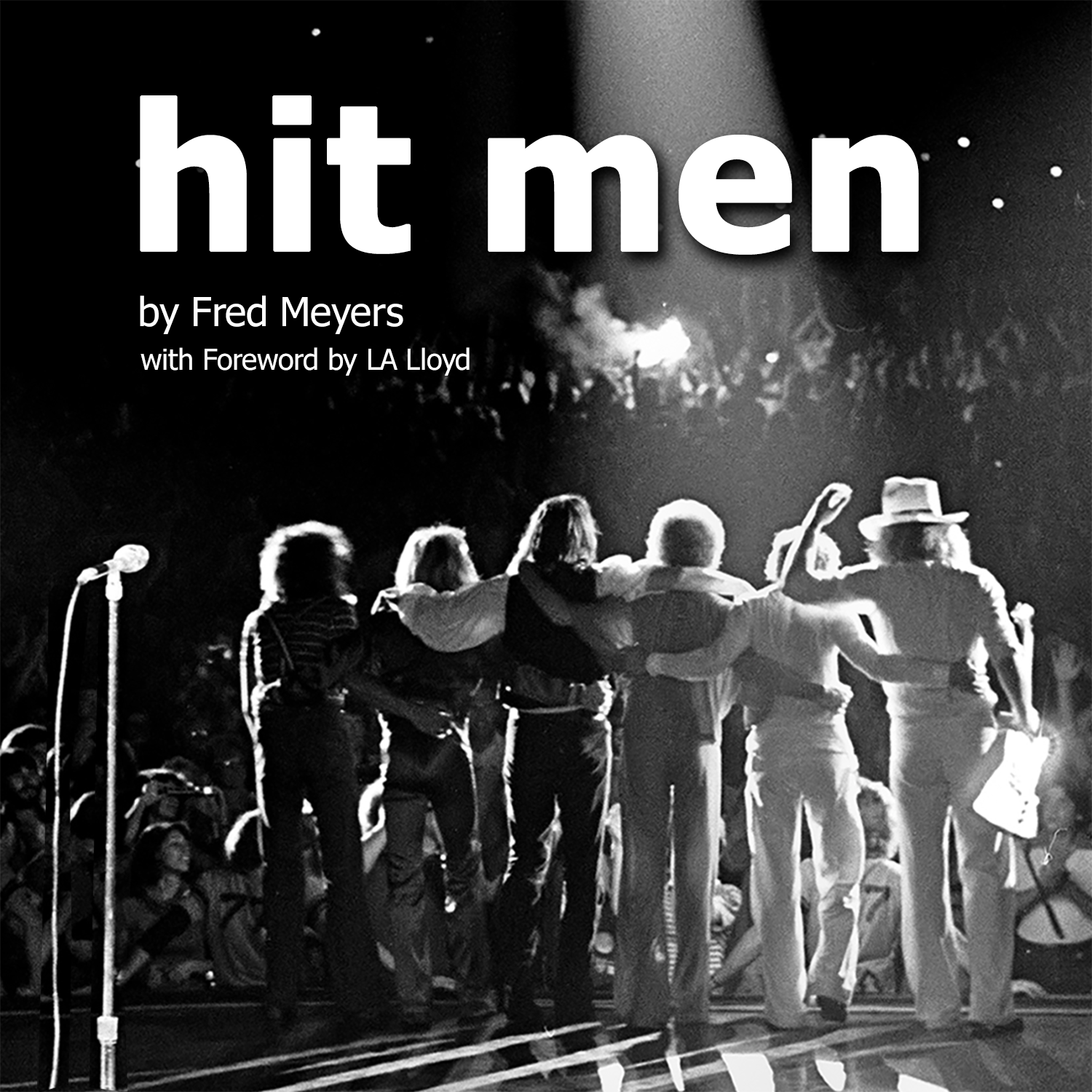
The book cover is Bob Seger and the Silver Bullet Band playing at Pine Knob, permission provided by the photographer, Tom Weschler.
Disclaimer: This is a work of fiction. While some characters are inspired by real people, certain events, dialogue, and situations have been fictionalized for dramatic purposes.